
Hot Water
When Should I Replace My Hot Water Tank?
September 22, 2026 · Jayden Svenhard, Blue Heron Plumbing and Heating · 4 min read
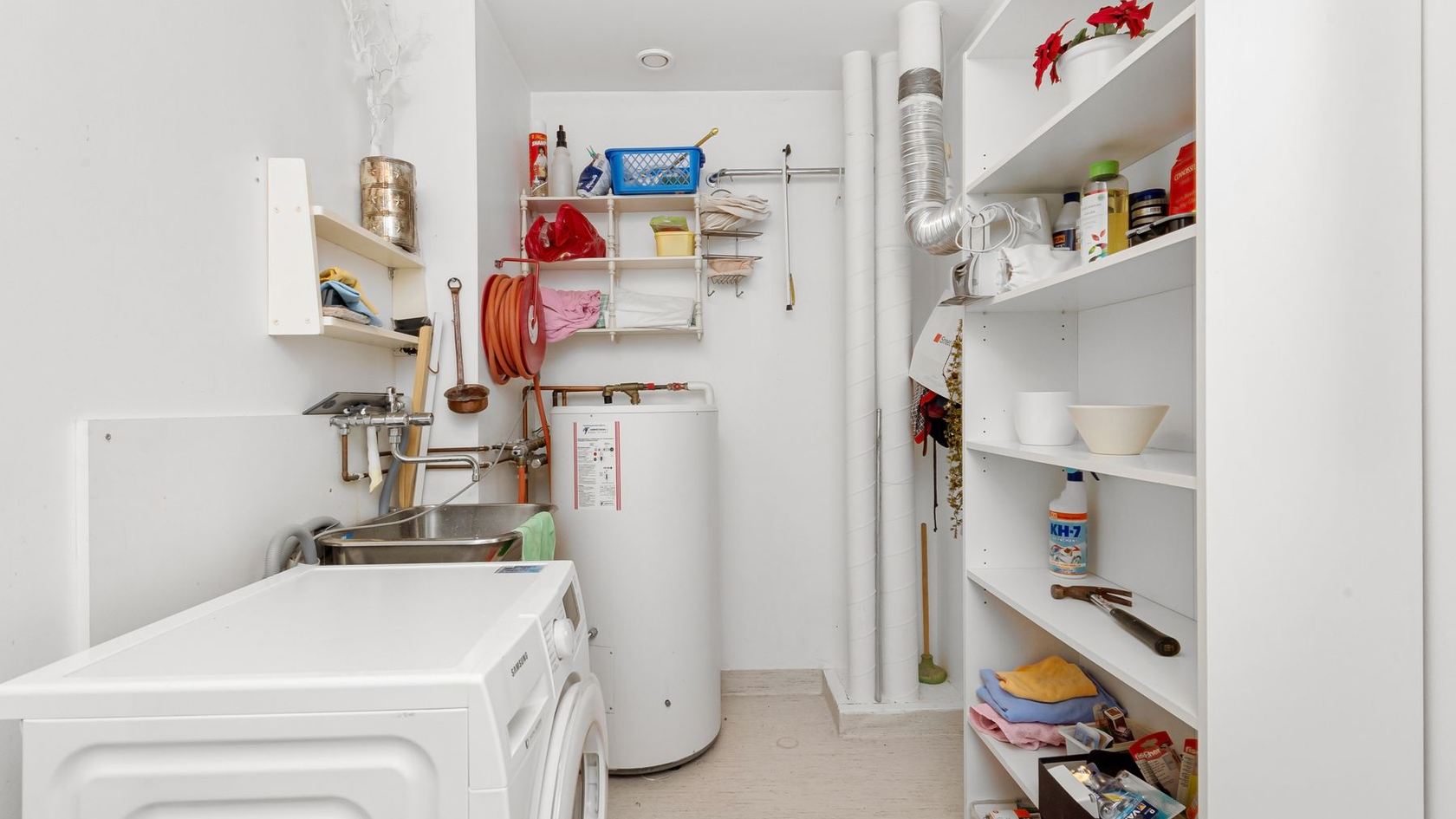
The useful version of this answer is not a number of years. It is a list of things the tank does before it fails, because almost every tank gives warning and almost nobody is watching for it.
That said, the number of years is the starting point: most conventional hot water tanks last somewhere in the region of eight to twelve years. Past ten, you are on borrowed time even if it is behaving perfectly.
The signs, roughly in the order they appear
Rumbling or popping while it heats. This is sediment. Minerals settle out of the water and collect at the bottom of the tank, and the noise is water trying to boil underneath that layer. It makes the tank work harder, run hotter at the base, and wear faster.
Hot water running out sooner than it used to. Same cause, usually. Sediment takes up volume that used to be water, and it insulates the burner or element from the water it is meant to be heating.
Rusty or discoloured hot water. If the cold runs clear and the hot runs brown, the problem is inside the tank. Often it is the anode rod: a sacrificial metal rod that corrodes so the tank does not. Anode rods are replaceable, and a tank caught at this stage can sometimes get several more years.
Water that is not as hot as it was, or that fluctuates. Could be a thermostat, could be an element, could be sediment. Worth a look rather than a guess.
Moisture or staining around the base. This is the one to act on immediately.
The leak is the last warning, not the first
If you find water around the bottom of the tank, check the obvious things first: a fitting, the drain valve, the temperature and pressure relief valve. Those are repairs.
If the tank body itself is weeping, it is finished. There is no repair for a corroded tank shell, and a slow weep from a tank body does not stay slow. Tanks that fail properly fail all at once, and they hold forty to seventy-five gallons.
Where the tank sits determines how much that matters. A tank in a garage with a floor drain is an inconvenience. A tank in a finished basement or an upstairs closet is a much more expensive afternoon.
When a repair is still the right call
Plenty of hot water tank problems are not the tank.
- Thermostats and elements on an electric tank are replaceable and relatively cheap
- A thermocouple on a gas tank is a common failure and a straightforward fix
- Anode rods can be replaced and will extend the life of a tank that is otherwise sound
- The temperature and pressure relief valve weeping is often a pressure problem elsewhere in the house rather than a tank fault (see our article on pressure reducing valves)
We will tell you which one you are looking at. If the honest answer is that a $200 repair buys you another three years, that is the answer you will get.
What shortens a tank's life here
Hard water. Mineral content accelerates sediment build-up, which is the mechanism behind most of the warning signs above. If your fixtures scale up and your kettle furs quickly, your hot water tank is dealing with the same water. A softener or filtration on the incoming line is worth considering, particularly if you are replacing the tank anyway: a new tank in the same water will go the same way as the old one.
Pressure that is too high. A failed pressure reducing valve puts the whole system, tank included, under more strain than it was built for.
Never being drained. Periodically flushing sediment out extends tank life, and almost nobody does it.
Planning it rather than reacting to it
A tank replaced on a Tuesday in September because you decided to is a different experience from a tank replaced on a Sunday in January because it let go. Same job, same cost, entirely different day.
If yours is past ten years and showing any of the signs above, it is worth getting looked at while it is still your decision.
Getting it looked at
Call or text (250) 888-5922. Blue Heron is owner-operated. Jayden is a Journeyman Plumber and Class B Gas Fitter, and he does the work himself. Estimates are free, and you will have an agreed price before anything starts. Reachable 8:00am to 8:00pm, seven days.
Serving Victoria, Saanich, Oak Bay, Esquimalt, View Royal, Colwood, Langford, Sooke, Sidney and the Saanich Peninsula.